Choosing sensory products for toddlers requires more than finding an attractive design. For preschool programs, early-learning brands, and educational product distributors, buyers need to consider material, size, safety, usability, and customization options.
Felt sensory mats can combine tactile exploration with simple hands-on activities, making them suitable for early-learning environments where children can interact with textures, shapes, and visual elements. However, not every sensory mat set is designed in the same way.
This guide covers the essential factors B2B buyers should evaluate when sourcing felt sensory mats for toddlers, including non-slip design, interactive features, structural safety, easy maintenance, and customization. It also introduces the ZOE 13-piece Sensory Mats Set as a product option for buyers looking for a customizable felt-based educational product.
Why Are Sensory Mats Useful for Toddler Learning?
Sensory play gives young children opportunities to explore materials and interact with objects through touch, movement, and visual recognition. A well-designed sensory activity can turn a simple play session into a hands-on learning experience.
For toddlers, the value of a sensory product depends heavily on how easy it is to interact with. Simple actions such as touching, stepping on, matching, and rearranging give children clear and easy ways to engage with the product. Sensory mats with straightforward interactive features can therefore be easier for young children to understand and use independently.
Sensory mats can also support activities involving fine motor skills and hand-eye coordination. For example, a child may use their hands to detach and attach an interactive element, or visually identify an animal and match it with the corresponding mat.
For B2B buyers, this means product design should be evaluated from both sides: how engaging the product is for children and how practical it is for the educational setting where it will be used.
What Should You Consider When Choosing Sensory Mats?
When sourcing sensory mats, buyers should look beyond the appearance of the finished product. Size, weight, surface stability, and interactive design can all affect how the product is used.
Size and Weight for Easy Handling
Size and weight affect how easily toddlers can pick up, move, and use sensory mats during play. A mat that is too large or heavy may be difficult for young children to handle, while a compact and lightweight design is easier to carry, arrange, and store.
When several mats are used together, size also affects how much floor space the activity requires. Buyers should therefore check the dimensions of each mat as well as the total weight of the set, especially when the product is designed for both hand-based activities and floor play.
For B2B sourcing, these specifications can also affect packaging, storage, and transportation. Checking them before placing an order helps buyers understand how the finished set will be handled throughout the supply chain.
Non-Slip Design for Active Play
Sensory products designed for floor activities need to remain reasonably stable during use. This becomes particularly relevant when children are stepping, crawling, or balancing on the mats.
A non-slip backing is therefore an important design feature for products intended for active sensory play. It can help keep the mats in place while children interact with them on the floor.
Felt-Based Sensory Mats for Toddlers
Infants and toddlers are particularly sensitive to temperature variations. Unlike conventional gel-based sensory mats that often feel cold to the touch—making them less suitable for extended play—our premium felt material offers natural thermal insulation and temperature-regulating properties, creating a comfortable surface that feels closer to the human body temperature. This temperature-buffering effect helps reduce thermal discomfort and sudden cold sensations, providing gentle and comfortable support for toddlers during early development.
Tactile Material Selection & Structural Safety
Selecting tactile materials for toddler sensory mats requires careful attention to international safety and environmental standards, as well as the specific requirements of the target market. For products intended for young children, common requirements may include ASTM F963, CPSIA, and EN71. Depending on the target market, buyers should also consider material-related requirements such as California Prop 65 (CA65) and RoHS.
For products with interactive features (such as detachable hook-and-loop elements), strong seam strength, heavy-duty stitching, and anti-detachment engineering are crucial to eliminate choking hazards from small parts during active play. Achieving a balance between tactile comfort, structural safety, and functional design requires appropriate engineering capabilities and reliable supply chain integration, supported by experience in early childhood toy design and manufacturing.
Rigorous Durability & Safety Testing
Durability is important for sensory mats designed for toddlers, given their active play habits and developing motor skills. Materials should undergo appropriate physical and chemical testing, including tensile and torque testing and chemical migration testing, to help verify structural integrity, color stability, and surface condition during regular use. These tests help reduce the risk of tearing, premature aging, or fading and support consistent product performance over 2 to 3 years of regular use.
Stain Resistance & Hygienic Maintenance
Frequent contact with young children can inevitably result in stains, making easy cleaning an important consideration for sensory mats. High-density felt is resistant to dirt and can be wiped clean with relative ease. In addition, secondary materials such as fabric bindings, trims, and hook-and-loop fasteners should also be designed for convenient cleaning and maintenance. This helps maintain a clean and hygienic play environment for everyday use.
What Makes the ZOE 13-Piece Felt Sensory Mats Set a Practical Choice?
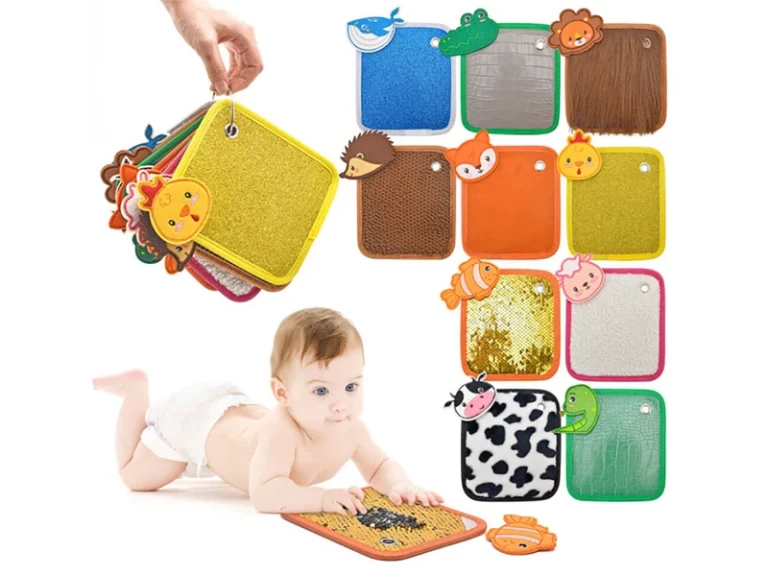
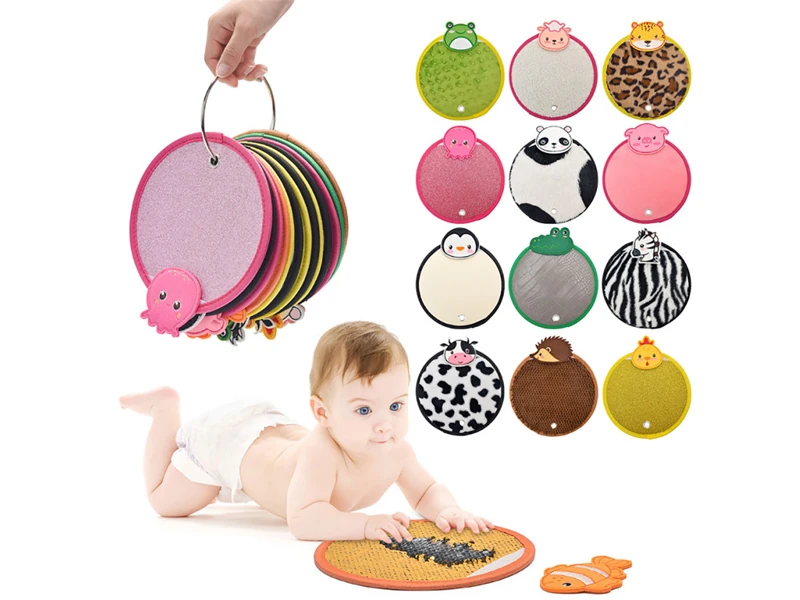
The ZOE 13-Piece Sensory Mats Set combines animal matching activities with a compact format designed for both hand-based activities and floor play. The set includes 13 animal themes: Tiger, Cow, Sheep, Frog, Penguin, Pig, Chicken, Panda, Crocodile, Hedgehog, Octopus, Fish, and Zebra.
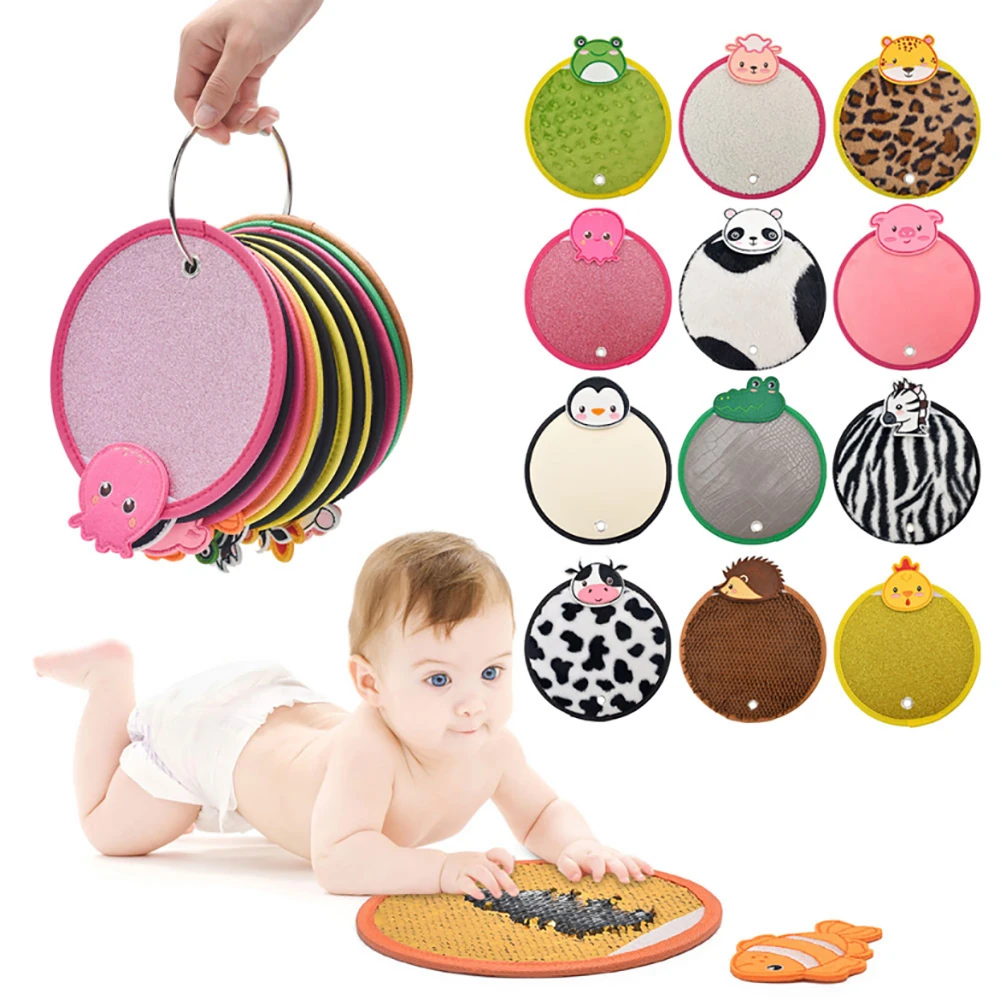
Each mat features a detachable hook-and-loop animal topper. Children can remove the animal, identify it, and attach it to the corresponding mat. This design gives the set a clear matching activity while involving hand movements and visual recognition. The product is designed to support fine motor skills training and hand-eye coordination through hands-on play.
Each mat measures approximately 200 × 200 mm (8 × 8 inches), and the complete 13-piece set weighs approximately 1 kg. An anti-slip backing is designed to keep the mats more stable during floor activities such as stepping, crawling, and balancing. Integrated hanging holes also allow the mats to be connected or mounted for vertical play and storage.
The mats are made from Eco-Polyester Felt and other eco-materials using heat press lamination. The product complies with ASTM F963, CPSIA, and EN71. The stated compliance age is 3 Years+, while the product is indicated as Suitable for 18M+.
For B2B buyers, the main specifications are:
| Specification | ZOE 13-Piece Sensory Mats Set |
| Product | Sensory Mats Set |
| Design | Exclusive Original Modular Design |
| Quantity | 13 pieces |
| Size | 200 × 200 mm per mat |
| Weight | Approx. 1 kg/set |
| Material | Eco-Polyester Felt; Other Eco-materials |
| Technique | Heat Press Lamination |
| Interactive Design | Detachable hook-and-loop animal toppers |
| Animal Themes | 13 |
| Backing | Anti-slip |
| Compliance | ASTM F963, CPSIA, EN71 |
| Suitability | 18M+ |
| Compliance Age | 3 Years+ |
| Customization | OEM / ODM / OBM |
| Custom MOQ | 500 sets |
| In-stock MOQ | 200 sets |
| Custom Lead Time | 48 days or negotiable |
| Packaging | OPP bag; color box optional |
| Payment | T/T, PayPal, WeChat Pay, Alipay, etc. |
| Incoterms | EXW, FOB, DDP, etc. |
| Origin | China |
What Customization Options Are Available for Felt Sensory Mats?
Customization can be important for educational brands, distributors, and retailers that need products aligned with their own product lines.
OEM and ODM Design Options
ZOE accepts OEM, ODM, and OBM projects for the sensory mats set. Its in-house R&D team focuses on early childhood educational products and provides customized solutions based on the requested design.
ZOE has more than 15 years of felt manufacturing experience and offers a material portfolio that includes industrial-grade felt and genuine Merino Wool Felt.
For a custom sensory mat project, buyers can discuss the desired design, materials, packaging, and other product requirements with the manufacturer before production.
MOQ, Packaging, and Lead Time
For customized orders, the stated MOQ is 500 sets, while the in-stock MOQ is 200 sets. The custom lead time is 48 days or negotiable.
The default packaging is an OPP bag, with a color box available as an optional packaging solution. Payment terms include T/T, PayPal, WeChat Pay, and Alipay, while available Incoterms include EXW, FOB, and DDP.
Conclusion
Choosing the right sensory mats for toddlers involves more than comparing colors and designs. Buyers should consider material comfort, non-slip stability, interactive features, structural safety, durability, easy maintenance, compliance, and customization requirements based on the intended application and target market.
The ZOE 13-piece Sensory Mats Set combines Polyester Felt construction, animal matching activities, anti-slip backing, and a modular design for hands-on educational and sensory play. With OEM, ODM, and OBM services, ZOE can also support customized sensory mat projects for educational brands, distributors, and retailers.
Looking for a customizable felt sensory mat for your product line? Contact ZOE to discuss your design, materials, packaging, MOQ, and other sourcing requirements.