When choosing educational toys for children, felt products offer a combination of softness, lightweight construction, and hands-on interaction. Felt Busy Books and Felt Busy Boards are both common interactive educational products, but they differ in structure, activity design, portability, and intended use.
For parents, educators, and B2B buyers of children’s educational products, understanding these differences helps buyers select the right product based on the target age group, learning needs, and intended use.
What Is a Felt Busy Book?
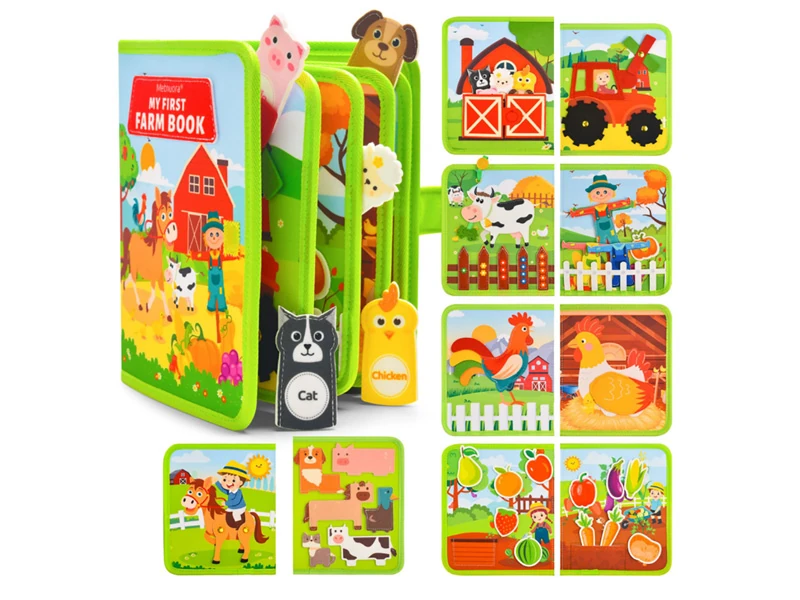
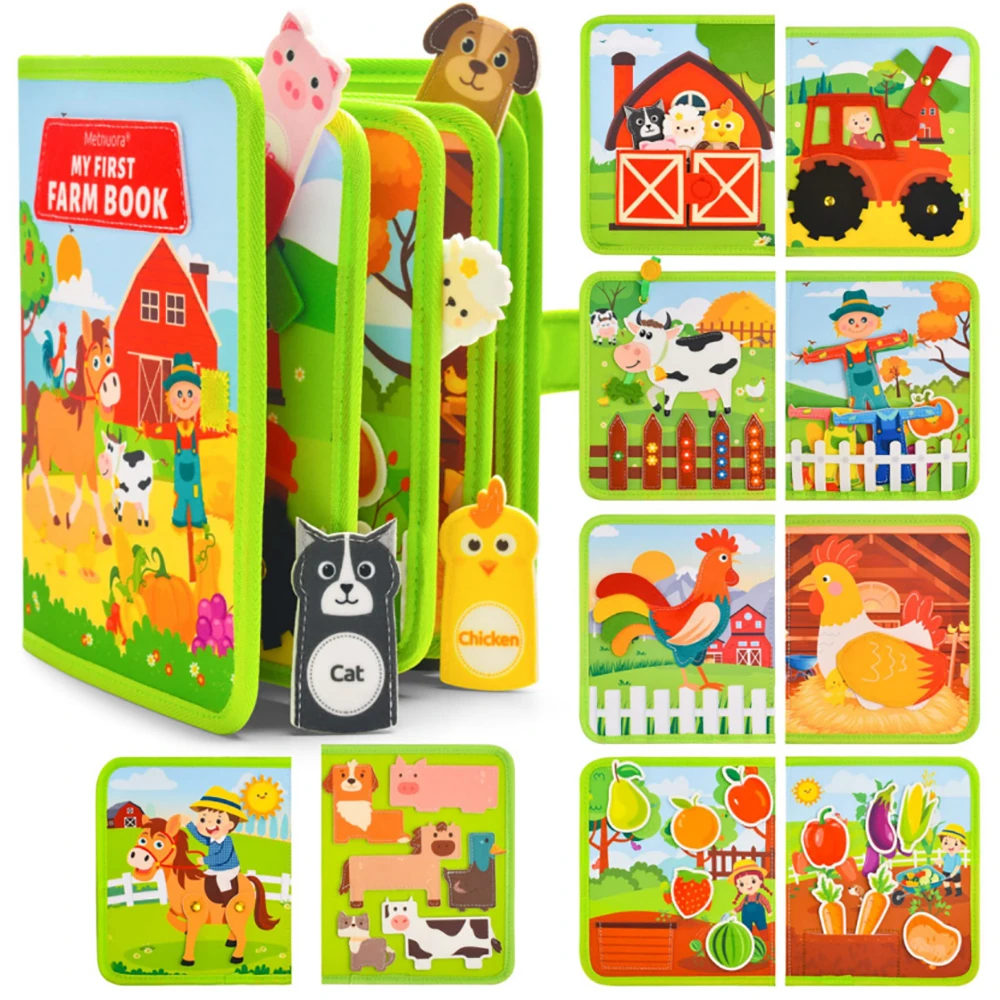
A Felt Busy Book, also known as a Felt Quiet Book, is a soft educational toy designed in a book-style format, consisting of multiple pages or activity areas. Rather than being designed primarily for reading, it encourages children to interact through activities such as touching, moving, matching, sorting, and rotating different elements.
Because of its book-style design, a Felt Busy Book can offer a wider variety of activities and more opportunities for cognitive development. As a result, it is ideal for structured environments such as homes, preschools, and daycare centers.
For B2B buyers, Felt Busy Books can also be customized in terms of themes, activities, materials, dimensions, visual design, and packaging to meet the needs of different target markets and age groups.
What Is a Felt Busy Board?
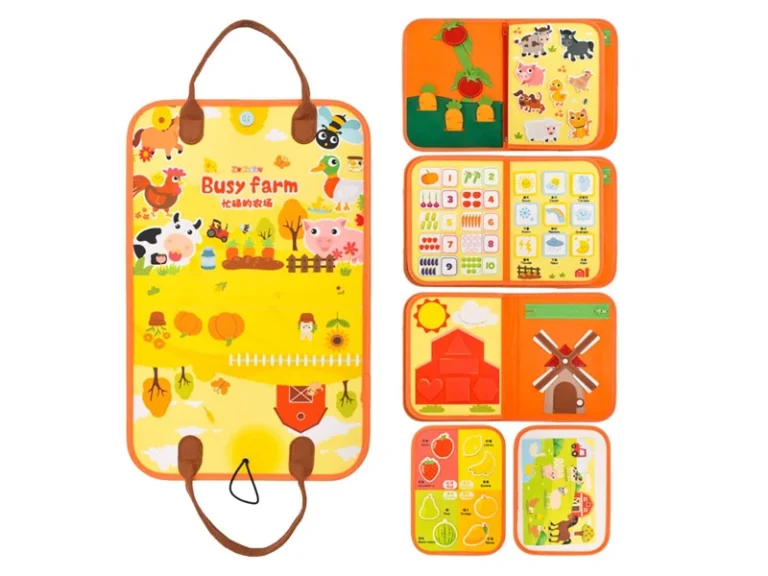
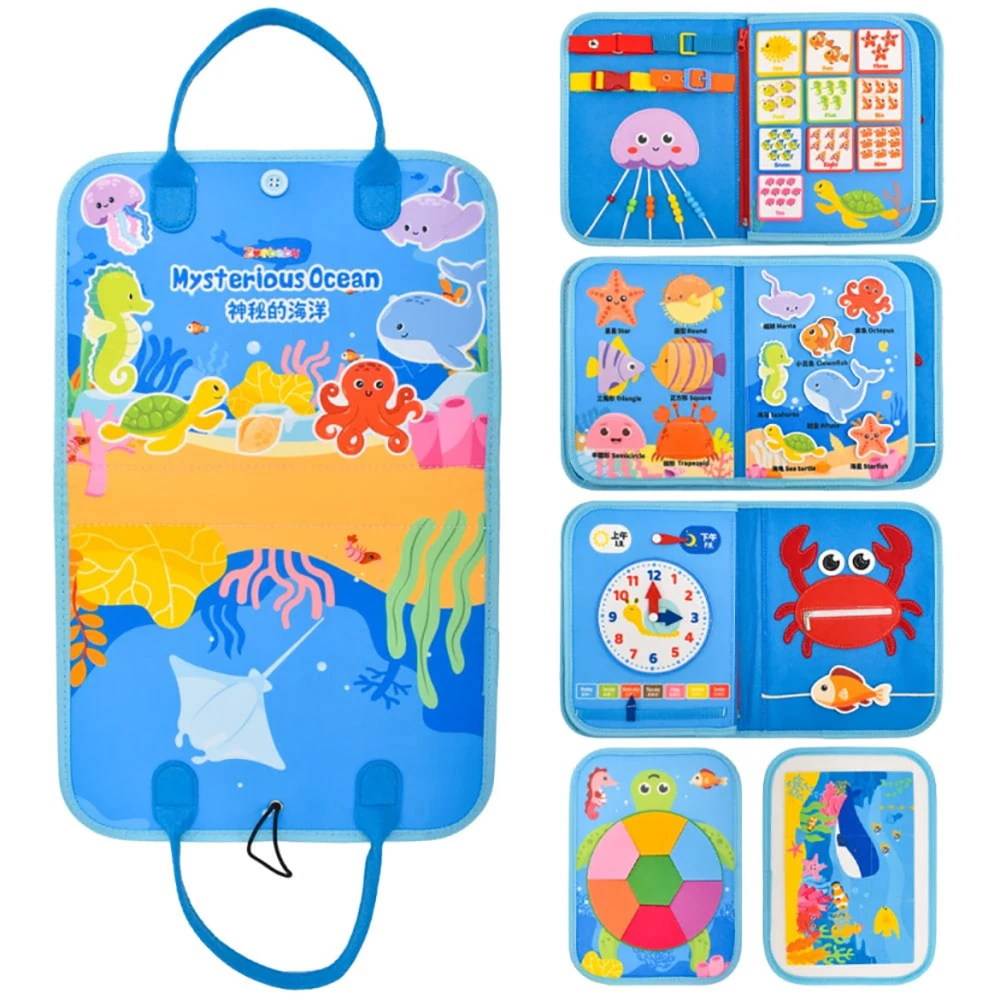
A Felt Busy Board is an interactive educational toy centered around hands-on activities. It typically features a board-style layout with different interactive elements on the surface, allowing children to touch, move, match, explore, and manipulate different components.
Compared with a Busy Book, a Busy Board typically has fewer pages, a smaller size, and a reinforced handle for easier carrying. Its individual pages can also be separated and rearranged as needed. It provides basic early learning activities and is generally available at a lower price.
For B2B buyers, Busy Boards can also be developed through OEM or ODM services, with options to customize activity combinations, themes, dimensions, materials, and other product requirements.
What Do Felt Busy Books and Felt Busy Boards Have in Common?
Although Felt Busy Books and Felt Busy Boards have different formats, they share several characteristics that make both suitable for early learning and hands-on activities.
Both Encourage Hands-On Learning
Both products encourage children to actively participate rather than simply observe. Children can touch, move, match, sort, rotate, and interact with different elements as part of the activities.
This hands-on approach allows children to participate and explore directly, making both Felt Busy Books and Felt Busy Boards suitable for interactive early learning environments.
Both Can Support Fine Motor Development
Both Felt Busy Books and Felt Busy Boards can include activities that require children to use their fingers and hands.
Tasks such as matching, sorting, moving, and rotating give children opportunities to practice hand movements and coordination. Therefore, when purchasing these products, it is more useful to look at the actual activities included rather than focusing only on whether a product is a Busy Book or a Busy Board.
Both Can Support Hand-Eye Coordination
Many activities in both products require children to observe a target before completing the corresponding hand movement.
Combining visual observation with hands-on actions can provide opportunities to practice hand-eye coordination. However, the specific benefits depend on the activity design and whether it is appropriate for the target age group.
Both Offer Themed and Custom Design Options
Both Felt Busy Books and Felt Busy Boards can be designed around familiar themes for children, such as animals, farms, and everyday life.
For B2B buyers, activity combinations, dimensions, materials, visual elements, and packaging can all be customized according to specific requirements. This makes both products suitable for private-label and OEM/ODM product development.
What Are the Key Differences Between Felt Busy Books and Felt Busy Boards?
Design and Activity Types
The most obvious difference between the two is their structure and activity layout.
Felt Busy Books typically use a book-style design, with different activities distributed across multiple pages or sections and not designed to be separated and rearranged. This allows more activities to be combined into a single product while maintaining a relatively compact format.
Felt Busy Boards also combine functionality and portability, but standard designs are generally simpler and available at a lower price. They mainly provide basic early learning activities.
The ZOE Felt Busy Board, however, combines the best features ombines the best features of both formats. ZOE’s independently designed Busy Board incorporates different activities around artistic themes. Each page also features a zipper, allowing children to arrange their play activities according to their own ideas and create a unique story.
From a product positioning perspective, a Busy Book can be viewed as a Busy Board developed for the higher-end market, with more pages and more activity options. A Busy Board, meanwhile, is easier to carry thanks to its handle and can be taken to different settings.
If the product will mainly be used in relatively fixed settings such as preschools or at-home early learning activities, and you want more activities and richer content, a Busy Book may be more suitable. If price and portability are more important, a Busy Board may be a better choice.
B2B Purchasing Recommendations
If you are a wholesaler or buyer considering adding Felt Busy Books and Felt Busy Boards to your product range, it is worth considering the product positioning, intended use, and target consumers.
Felt Busy Books use a book-style structure and generally have more pages and a larger overall size, making them suitable for parent-child early learning activities in relatively home or classroom settings. Even with multiple activities, the products can maintain a solid structure and resist deformation. They are also suitable for retail displays, where they can attract consumers’ attention and serve as a featured children’s product.
Felt Busy Boards, in contrast, offer a more convenient experience through their smaller size and lighter weight. Their handles allow children or parents to carry them easily, making them suitable for long trips and outdoor activities. They can also help toddlers stay away from electronic screens while remaining quiet and engaged in focused activities.
Because of their portability and relatively lower price, Busy Boards can also be an effective tool for promoting a brand and can work well as a main selling product.
For wholesalers and buyers, ZOE Felt recommends purchasing a combination of both products and adjusting inventory based on consumer feedback. A reliable supplier is critical for sales performance.. With three independent design teams and an in-house factory with a daily production capacity of 10,000+ units, ZOE Felt can help you respond more flexibly to changing market demand.
How to Choose the Right Felt Busy Book or Busy Board?
Consider the Child’s Age
First, determine the primary age group the product is intended for.
Younger children may be better suited to simple and intuitive activities, while older preschool children may be ready for more complex matching, sorting, sequencing, or combination tasks.
When choosing a product, consider the target age, activity difficulty, product design, and relevant safety requirements rather than choosing solely based on whether the product is a Busy Book or a Busy Board.
Consider the Learning Activities
Next, consider what types of learning activities you want the product to provide.
If you want to combine a variety of activities in one product, the multi-page structure of a Busy Book can be practical. Different pages can feature different tasks while maintaining a consistent theme, allowing children to experience different types of interactive activities within one product.
If portability and a more compact interactive design are more important, a Busy Board may be more suitable. Multiple interactive elements can be arranged within a limited activity area, while the product is also easier to carry to different settings.
Consider Materials and Safety
Materials and safety are also important considerations when purchasing children’s educational products.
Felt educational products are typically crafted from high-density felt, eco-friendly polyester fibers, durable twill fabric, and other safe textiles. Different materials can affect the product’s texture, appearance, durability, and overall design.
B2B buyers should also understand the manufacturer’s material standards and product testing. Depending on the target market, relevant requirements may include CP65, RoHS, EN71, or CPSIA.
If the products are intended for sale in multiple international markets, buyers should confirm the applicable testing, certification, labeling, and safety requirements for each target market.
Why Choose ZOE for Custom Felt Busy Books and Busy Boards?
For B2B buyers, choosing the right product format is only one part of the purchasing process. A manufacturer’s product development, customization, and production capabilities are also important, especially for OEM, ODM, and private-label projects.
ZOE provides OEM, ODM, and OBM services for felt educational products, including Felt Busy Books and Felt Busy Boards. Buyers can customize product themes, activity designs, materials, dimensions, visual elements, packaging, and other details according to their target market needs.
ZOE operates a 24,000-square-meter production facility with 5 production lines and more than 100 pieces of advanced equipment. The company has more than 150 professionals working in production, quality control, and product development, and currently offers more than 1,000 different felt product SKUs.
ZOE also holds ISO9001, BSCI, CP65, RoHS, and OEKO-TEX certifications. For B2B buyers sourcing custom Busy Books or Busy Boards, its product development capabilities, customization services, production resources, and quality control system are important factors to consider when evaluating a supplier.
If you are looking for Felt Busy Books or Busy Boards for your target market, ZOE can provide customized options based on your product positioning and purchasing requirements.
Frequently Asked Questions
1. What is the difference between felt educational toys at different price points?
In most cases, a more complex design means higher costs. This includes not only the cost of the product itself but also the cost of subsequent children’s toy testing. We ensure that all products comply with required safety standards—such as CPC and CE—prior to shipment.
2. As a wholesaler, should I choose a Felt Busy Book or a Felt Busy Board?
The right choice depends on your purchasing needs, target market, product positioning, and intended use. ZOE’s professional consulting team can provide recommendations based on your requirements. In many cases, however, purchasing a small batch of both products is a relatively safe approach.
3. Why don’t custom felt educational products come with testing certificates?
Most products need to be tested by a certification body before they can be sold in the local market. For smaller initial orders, individual testing costs can be proportionally high. However, for recurring volume orders, we can absorb or credit the testing fees to keep your procurement budget on track.
Conclusion
Felt Busy Books and Felt Busy Boards are both children’s educational products centered around hands-on play. Both can be used for fine motor practice, hand-eye coordination, and interactive learning.
The main differences are their structure, activity layout, and portability. A Felt Busy Book uses a book-style design to organize different activities across multiple pages, making it suitable for consumers looking for a wider range of activities. A Felt Busy Board focuses more on portability and convenience, making it suitable for travel, outdoor activities, and other situations where the product needs to be carried around. For buyers looking to cover both fixed and portable use cases, combining Felt Busy Books and Busy Boards can be a practical option, allowing different products to meet different consumer needs.
For custom or bulk orders, it is also important to evaluate the manufacturer’s product development capabilities, OEM/ODM services, production capacity, and quality control system to ensure that the final products meet the needs of the target market. If you are sourcing Busy Books or Busy Boards, ZOE Felt offers existing products and customization services. Contact us for product details and a quotation.