As children’s toys are becoming increasingly diverse in global markets, buyers searching for a custom busy board exporter face a familiar challenge: balancing safety compliance, manufacturing precision, and total landed cost. Beyond surface-level aesthetics, evaluating a factory’s actual material and quality engineering is also essential.
What Is a Felt Busy Board?
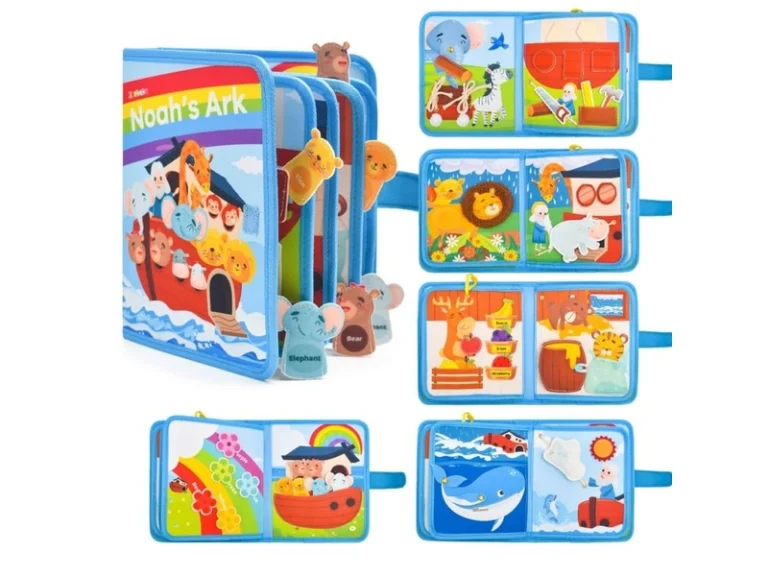
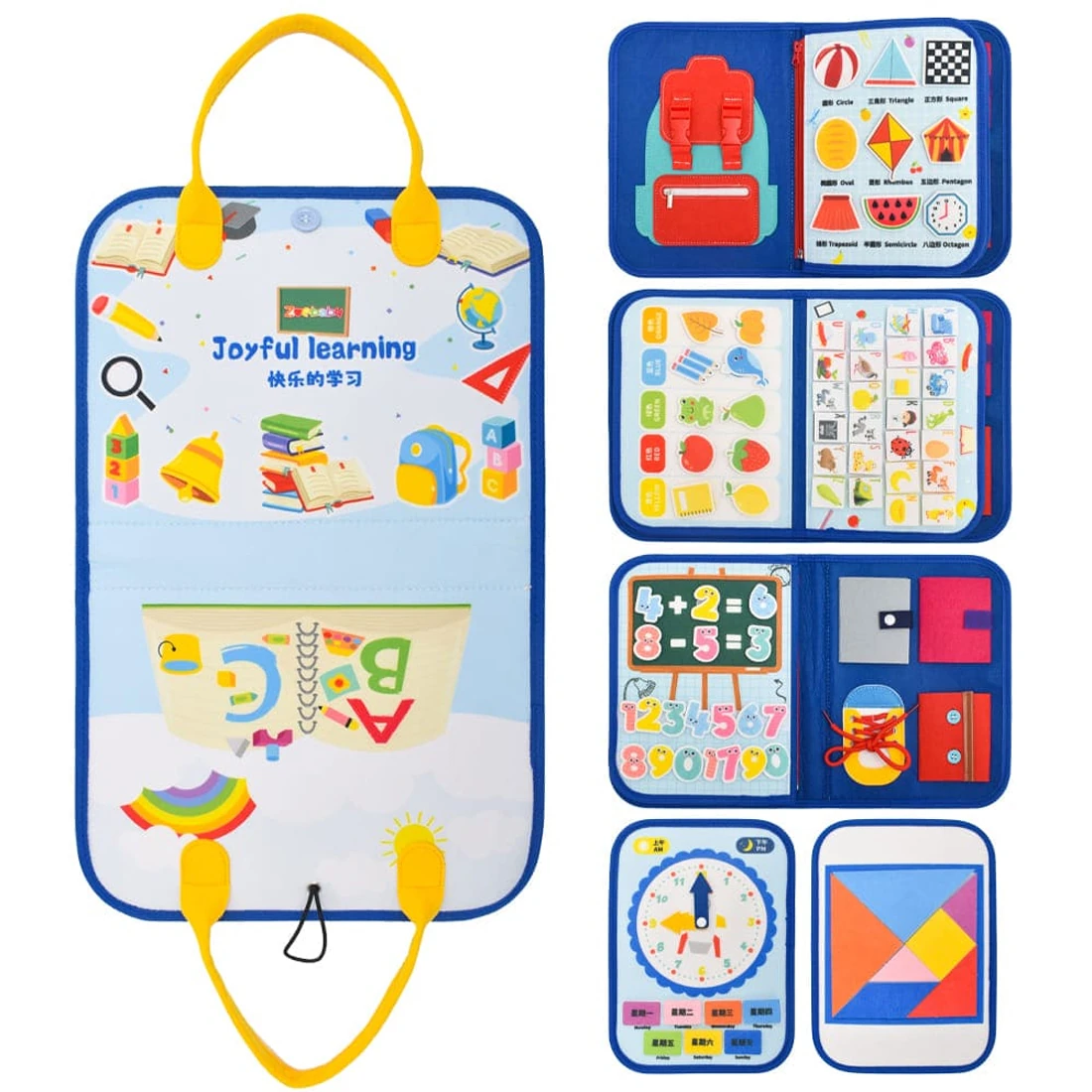
The felt busy board is a lightweight, portable sensory activity board designed to help young children develop fine motor skills, hand-eye coordination, and early self-care abilities. Children interact with puzzle pieces featuring buckles, zippers, shoelaces, and buttons attached to a foldable fabric base, developing practical skills through hands-on activities. This process offers a safe, screen-free learning environment that focuses on tactile experiences.
Alignment with Montessori Principles
The core of the Montessori educational philosophy lies in the concept of autonomous, hands-on learning through interaction with real-world objects. The design of a busy board, which transforms everyday actions into structured exercises for developing fine motor skills, perfectly embodies this approach. Engaging in these activities helps young children cultivate bilateral coordination, spatial awareness, and finger dexterity, while also fostering the focus and perseverance needed for problem-solving.
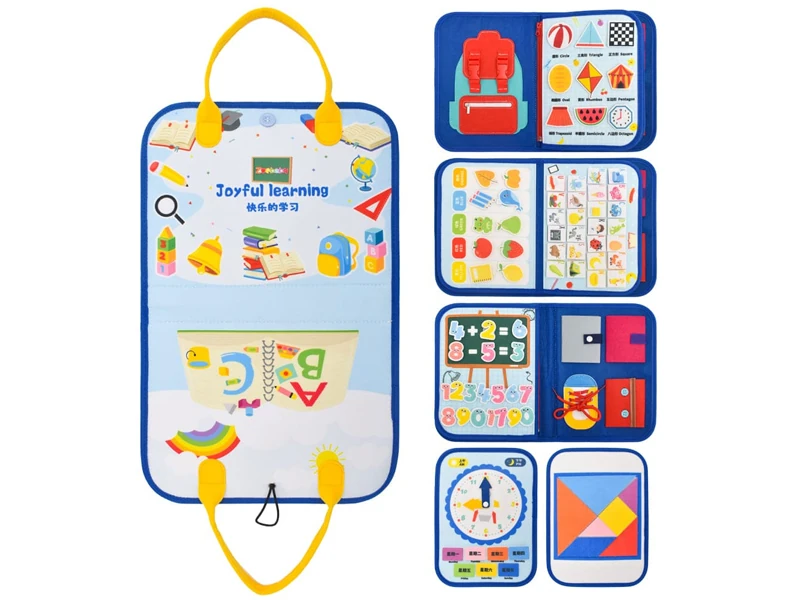
Building on basic motor skill practice,The ZOE Felt Busy Board incorporates a rich array of elements —such as shape sorting, color recognition, number games, clock-reading exercises, and early vocabulary building—with this refined design further promoting cognitive development. Compared to traditional busy boards that mainly focus on buckles or dressing practice, ZOE Felt Busy Board integrates several Montessori-inspired learning activities in one foldable toy. Interactive matching activities with removable felt pieces help toddlers recognize colors, shapes, animals, and everyday objects while naturally building fine motor skills, hand-eye coordination, and early thinking skills.
Why Felt Materials Are Popular for Busy Board Design
In recent years, felt has been a preferred material for mass-produced busy boards instead of traditional wooden boards, especially among international buyers working with custom busy board exporters. This preference is driven by several key advantages:
Child Safety Comes First: Unlike wooden boards, felt has a soft, flexible texture with no hard edges or splinters. Even if the board falls, the chance of injury is much lower.
Easy to Carry: Felt busy boards fold down into a compact size and weigh very little, so they fit easily into a backpack or travel bag. Whether for air travel, road trips, or daily outings, they serve as highly practical solutions. A Quieter Way to Play: Felt makes very little noise during use, making these boards well suited for classrooms, restaurants, airplanes, libraries, and other places where a quiet environment matters.
Lower Shipping Costs: Felt can be compressed for packing, so each shipment takes up much less space than wooden or plastic busy boards. This helps reduce transportation costs for both manufacturers and wholesale buyers.
These advantages make felt the preferred material over wood for modern busy board designs across the global market.
Key Product Specifications Buyers Should Evaluate Before Ordering
Material Quality, Cutting Precision and Stitching Durability
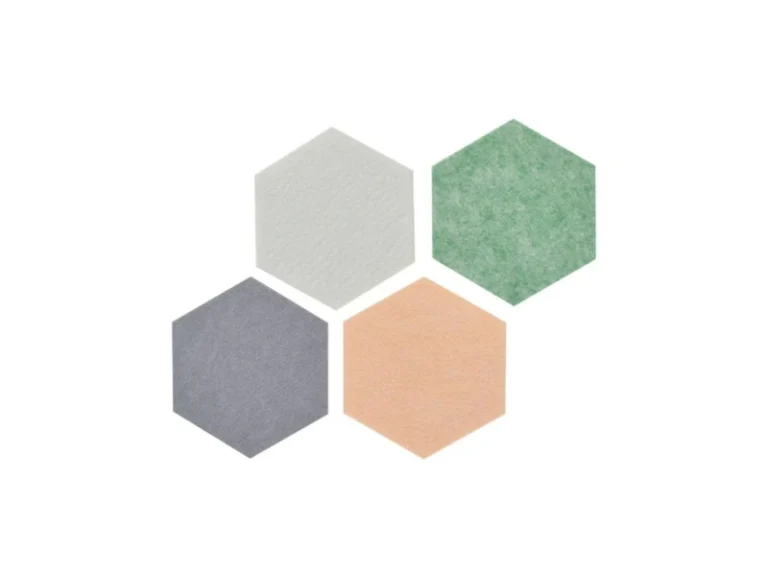
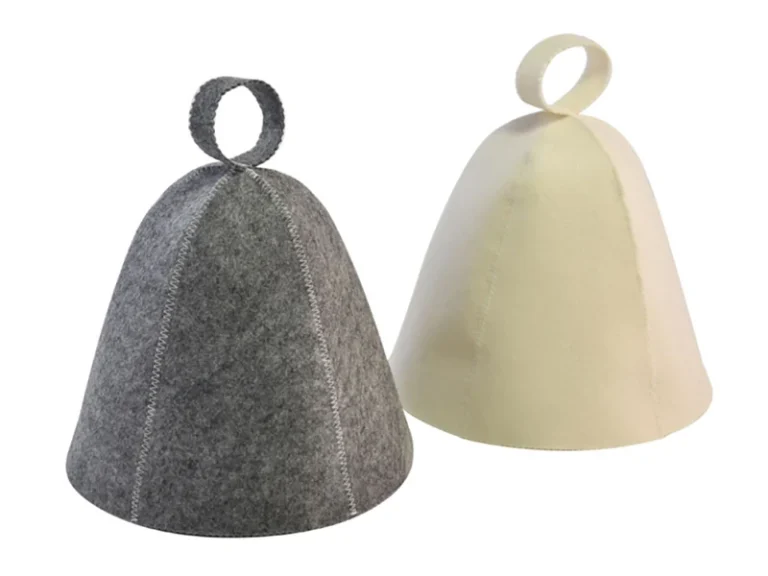
Not all felt busy boards are made to the same standard. Differences in felt thickness, cutting methods, and stitching quality can have a big impact on how long the product lasts.
Lower-priced boards often use 180–220 GSM felt to keep production costs down. While this helps reduce the selling price, the material is more likely to stretch, pill, or lose its shape after frequent use. Most experienced manufacturers prefer 100% non-woven, needle-punched polyester felt in the 350–500 GSM range because it stays firmer and can reach an ISO 12945-2 Grade 4+ anti-pilling rating.
The way the felt is cut is another detail that’s easy to overlook. With CNC laser cutting, the heat seals the edge at the same time the material is cut, so the finished pieces are smooth and don’t leave loose fibers behind. Traditional die-cutting is less precise, and the edges usually begin to fray after extended use.
The outer fabric can also affect the final look and feel of the product. Instead of using standard printed fabric, many premium models are covered with high-density twill fabric over the felt base. The print stays brighter for longer, and the finished board has a more refined appearance that stands out on retail shelves.
To improve both durability and appearance, ZOE Felt applies several manufacturing processes throughout production. Precision laser cutting creates smooth, burr-free edges, while high-definition dye-sublimation delivers clear graphics that remain vibrant during everyday use. Reinforced stitching is used around frequently handled accessories to improve structural stability and reduce the possibility of parts becoming detached. These manufacturing details help the matching game felt busy board maintain a consistent appearance across large production batches while supporting long-term use in educational environments.
| Parameter / Feature | Generic Market Busy Board | ZOE High-Density Felt Busy Board |
| Felt Fabric Density (GSM) | Low-density 180–220g/㎡ (prone to warping) | 350–500g/㎡ non-woven felt |
| Edge Processing | Manual die-cut (frays over time) | CNC precision laser-cut (burr-free, sealed edges) |
| Small Part Attachment | Single-needle stitching or hot-melt glue | Reinforced double-needle X-stitching with backing strips |
| Accessory Pull Strength | Low (≤40 N force retention) | High (≥90 N pull force retention for 10s) |
| Cover Graphic Finish | Standard silk-screen or plain unprinted felt | High-definition dye-sublimation twill fabric printing |
| Volumetric Freight Packaging | Uncompressed bulk carton packing | Pneumatic vacuum-compressed packaging (50%–60% CBM reduction) |
Benchmarks drawn from manufacturer product specs and ISO 12945-2 testing standards.
Custom Busy Board Manufacturing Process: From Design to Mass Production
Turning an idea into a retail-ready Montessori busy board takes more than good design. It also requires reliable production, consistent quality control, and an experienced manufacturing team that can deliver the same standard across every order.
Product Design and Customization Development
Most projects begin with a vector drawing or a physical sample. Based on the target age group, the design team plans the activity layout, color combinations, and learning modules before moving into sampling.
Branding is usually added during this stage as well. Depending on customer requirements, logos can be incorporated through woven labels, 3D rubber patches, or printed graphics on the cover, allowing each busy board to reflect the customer’s own brand identity.
Production Capabilities of a Professional Busy Board Exporter
Once the sample is approved, production moves into full-scale manufacturing. A professional custom busy board exporter should be able to maintain both production efficiency and product consistency as order volumes increase.
Modern factories typically use automated laser cutting, digital twill fabric printing, and heavy-duty sewing equipment to improve accuracy and reduce manual errors. Standardized production lines also help keep important details consistent, from multi-page zip-in layouts and Velcro panels to shoulder straps and other assembled components.
Quality Inspection Before International Shipment
Quality control is integrated throughout the production lifecycle rather than being deferred until final assembly. Instead, checks are carried out throughout the manufacturing process, followed by a final inspection before shipment.
Common inspection procedures include:
Pull Testing: Buttons, beads, zipper pulls, and other small accessories are tested to withstand a pulling force of 90 N (20 lbf), helping ensure they remain securely attached during normal use.
Needle Detection: Every ZOE Felt Busy Board passes through a 100% inline ferrous needle detector to verify that no broken sewing needle fragments remain inside the finished product.
AQL Inspection: Finished goods are sampled according to AQL 2.5 (Major) and AQL 4.0 (Minor) standards. Inspectors also check stitch density, typically 7–9 stitches per inch, together with the operation of zippers, buckles, Velcro, and other functional parts.
ZOE provides a complete custom busy board manufacturing solution for global buyers, covering design assistance, material selection, prototype development, mass production, and pre-shipment inspection. With professional production processes and strict quality management, ZOE helps retailers, educational brands, and wholesalers achieve consistent product quality while developing customized Montessori toys for different markets.
Frequently Asked Questions About Custom Felt Busy Boards
1. What is the MOQ for custom felt busy boards?
For fully customized OEM or ODM projects, the MOQ is usually 1,000–2,000 pieces because custom materials and tooling need to be prepared before production begins. If you’re selecting an existing design, many manufacturers can accept orders of 300–500 pieces with only logo or packaging customization.
2. Which certifications should buyers ask for?
The answer depends on where the products will be sold. For the US market, buyers usually request a CPC, together with ASTM F963-17 and CPSIA test reports. For Europe and the UK, CE, UKCA, EN71 Parts 1–3, and REACH documentation are commonly required. Many importers also ask whether the factory has ISO 9001, BSCI, or SEDEX certification.
3. How do manufacturers keep small parts securely attached?
Most factories reinforce buttons, buckles, and other accessories with double-needle X-stitching and an additional backing layer. Before shipment, batches are pull-tested to 90 N (20 lbf) for 10 seconds to verify that components remain securely attached and meet the requirements of ASTM F963 and EN71-1.
Conclusion
Choosing the right custom busy board exporter involves more than comparing product designs and prices. For wholesalers, educational retailers, and private-label brands, factors such as material quality, manufacturing capability, safety compliance, and customization support are essential for building a reliable supply chain and reducing sourcing risks.
As a professional felt educational toy manufacturer, ZOE Felt Products provides comprehensive custom felt busy board solutions for global buyers. From product design and material selection to prototype development, mass production, and pre-shipment inspection, ZOE follows a complete manufacturing process to help customers create felt busy boards that meet different market requirements.
Looking for a reliable custom busy board manufacturing partner? Contact ZOE Felt Products to discuss your design ideas, customization requirements, and wholesale project needs. Our team can help you develop high-quality felt busy boards from concept to mass production.